According to the American classification system DSM-IV
nocturnal enuresis is defined as “involuntary loss of urine during nighttime sleep at least 2 times a week, in children over 5 years when not caused by problems in the central nervous system or consequences resulting from the use of substances such as diuretics”.
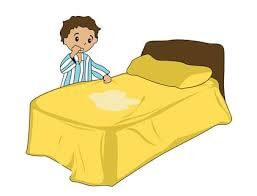
Types of enuresis:
- Night: where urine loss occurs only during the night. It is more common in boys.
- Daily: where urine loss occurs only during the day. It is more common in girls.
- Joint: daily and nocturnal enuresis.
- Primary: called enuresis, where the patient was never fully dry during sleep for at least 3 months
- Secondary: called enuresis, where the patient was previously completely dry for at least six months.
- Monosymptomatic: when bedwetting occurs only at night. Constitutes 80-85 % of cases.
- Polysymptomatiki: enuresis accompanied by urinary frequency, urgency, urge incontinence, constipation, loose stools.
Frequency
Daily: 5.5% at age 5-12 years
Night: 15% at age 5 years
BOYS: GIRLS: 2:1.
Table 1: Percentage of children who stay dry during the day and night in various preschool.
AGE DAY % NIGHT %
2 25 10
2.5 85 48
3 98 78
Table 2: Causes of primary and secondary enuresis
| CAUSE PROTOPATHOUS ENOURISIS |
CAUSES SECONDARY
ENOURISIS |
| IDIOPATHIC, NIGHT MULTIURINE,
SMALL BLADDER CAPACITY |
IDIOPATHIC, NIGHT MULTIURINE,
SMALL BLADDER CAPACITY |
| OAB |
OAB |
| CYSTITIS |
CYSTITIS |
| CONSTIPATION |
CONSTIPATION |
| NEUROGENIC BLADDER |
PSYCHOGENIC CAUSES |
| STRICTURE URETHRA |
NEUROGENIC BLADDER |
| PSYCHOGENIC CAUSES |
EPILEPSY |
| EKTOPIOS URETER |
SLEEP APNOIA OBSTRUCTIVE CAUSES |
| INSIPIDUS DIABETES |
DIABETES |
|
INSIPIDUS DIABETES |
|
STRICTURE URETHRA |
Table 3: Causes Nighttime and daytime enuresis
| NIGHTTIME ENURESIS |
|
DAYNIGHT ENURESIS |
| INHERITANCE |
|
MYELOMENINGOCELE |
| SMALL BLADDER CAPACITY |
|
SPINAL CORD INJURY |
| DIABETES |
|
INCONTINENCE EFFORT |
| INSIPIDUS DIABETES |
|
ATONIC BLADDER |
| NIGHT MULTI URINE |
|
OAB |
| INTENSELY HEAVY SLEEP |
|
URINARY INFECTIONS |
TREATMENT
- Limitation of fluids consumed before the child reaches the time to fall asleep
- Encouragement for complete emptying of the bladder just before sleep
- Recording habits at night, so as to allow getting up early to go to the toilet
- Avoiding any punishment associated with the problem
- Rewarding those nights bed stays dry
- Waking during the night
- Use enuresis alarm sensor
- Medication
- Surgeries